Live monitoring
CO₂ monitoring — the pulse of building ventilation
Carbon dioxide is the simplest, most cost-effective signal that a space is properly ventilated. Continuous monitoring turns invisible airflow into actionable, room-level intelligence.
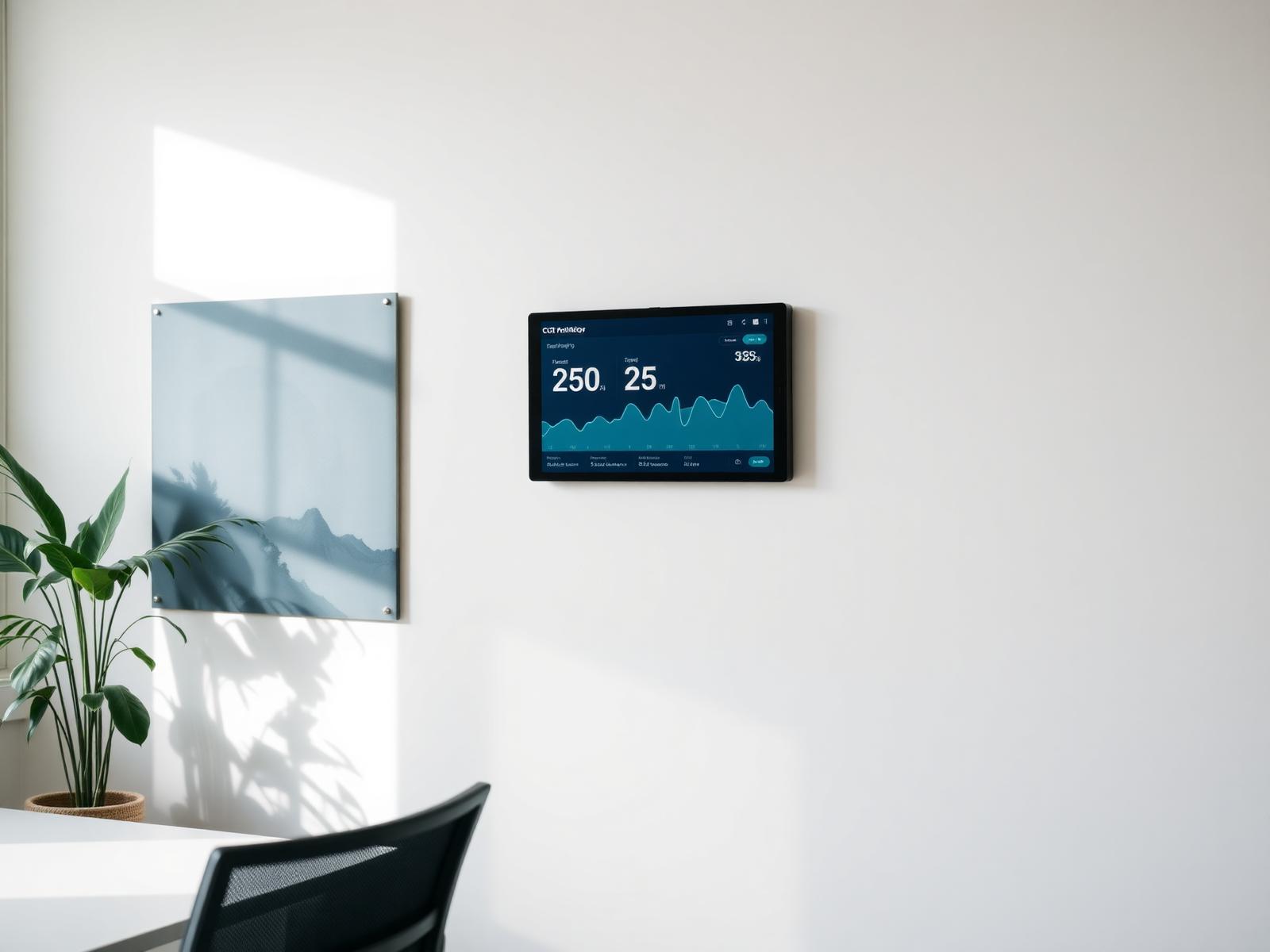
CO₂ — MEETING RM 04
724 ppm
Min
412
Avg
684
Max
1,108
Why CO₂
Carbon dioxide as a ventilation proxy
Humans exhale CO₂ continuously. When it accumulates indoors, it tells you that fresh air supply isn't keeping up with occupant load — and that other pollutants are likely accumulating too.
<600
Outdoor-equivalent fresh air levels.
600–1000
Comfortable, well-ventilated spaces.
1000–1500
Cognitive performance starts to decline.
>1500
Action required — increase ventilation.
Cognition impact
Decision-making scores fall ~15% at 1400 ppm vs 600 ppm.
Sleep quality
Bedroom CO₂ above 1500 ppm degrades restorative sleep.
Sensor accuracy
NDIR sensors with auto-calibration are the IAQ standard.
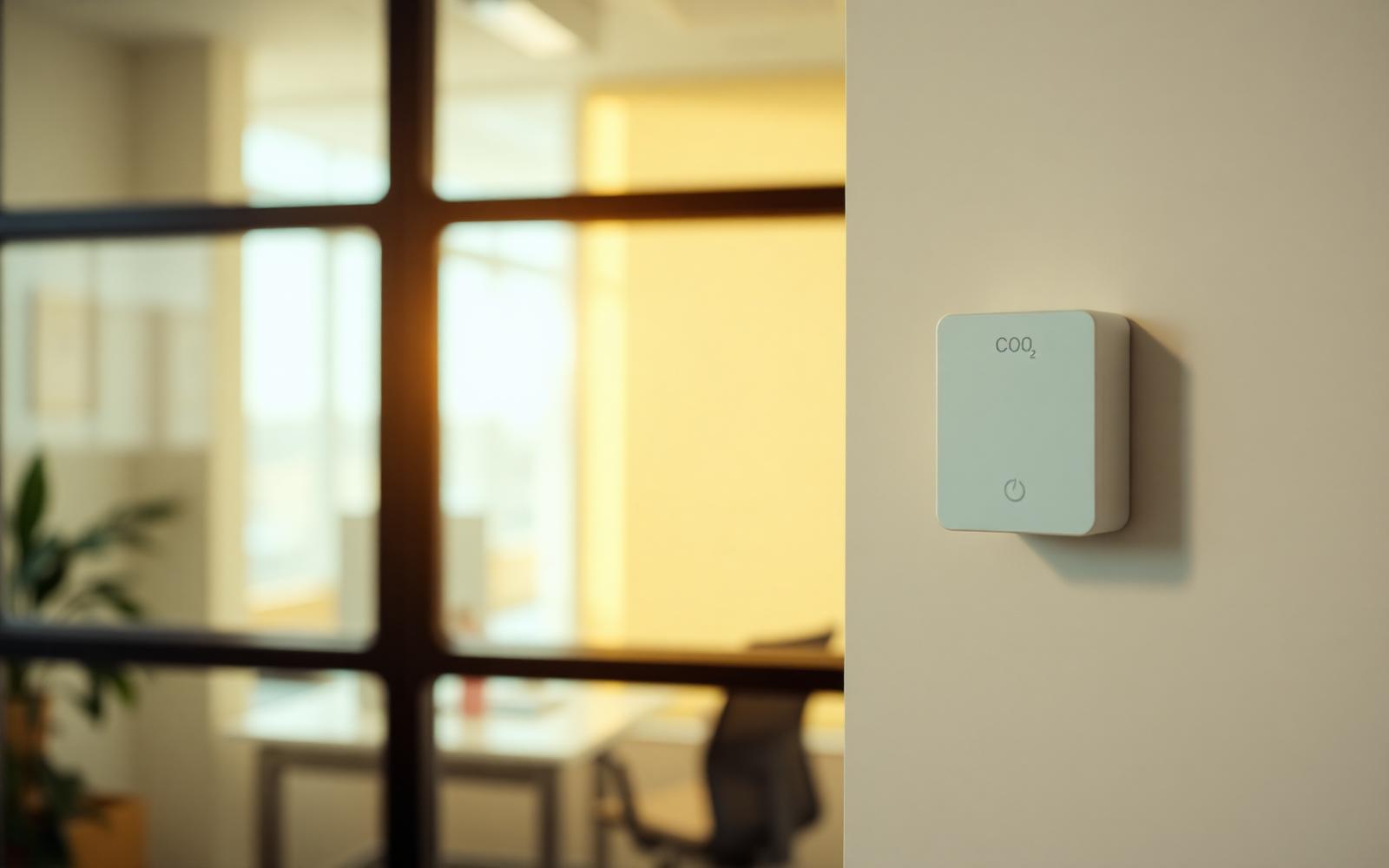
Demand-controlled vent.
Modulates damper position based on real-time CO₂.
Hardware
Choosing the right CO₂ sensor
Look for NDIR (non-dispersive infrared) sensors with ±50 ppm accuracy, automatic baseline calibration, and a sampling interval of 1–5 minutes. Battery devices are sufficient for spot diagnostics; mains-powered networked sensors enable long-term dashboards and alerting.
Benchmarks
Recommended CO₂ targets by space
| Space | Steady-state CO₂ | Action threshold |
|---|---|---|
| Open-plan office | <800 ppm | >1000 ppm |
| Meeting room | <1000 ppm | >1200 ppm |
| Classroom | <1000 ppm | >1500 ppm |
| Bedroom (overnight) | <1000 ppm | >1400 ppm |
| Hospital ward | <800 ppm | >1000 ppm |
Roll out CO₂ monitoring across your portfolio
From single-room sensors to estate-wide IAQ platforms — we'll specify and deploy the right system.
Plan IAQ monitoring